



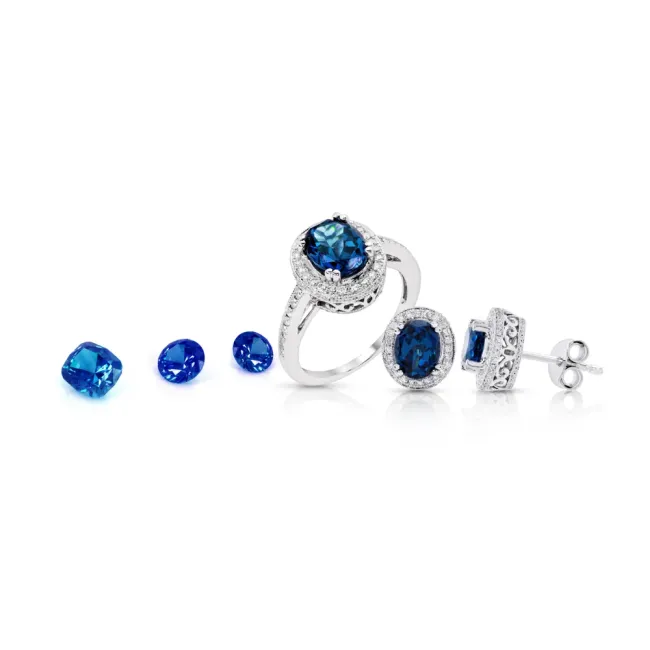
HOW TO SELL SAPPHIRE JEWELRY

Sapphires rank among the world's most prized gemstones, valued for their vivid color, exceptional hardness, and centuries-long association with royalty and fine jewelry. Whether inherited, gifted, or simply no longer worn, sapphire jewelry can represent meaningful value — but realizing that value requires understanding how the market actually works. Unlike diamonds, which follow relatively standardized grading criteria, sapphires are assessed through a more nuanced combination of color, origin, treatment history, and demand. This guide covers the key factors that determine what your sapphire jewelry is worth, where you can sell it, what to expect from the process, and how to avoid common mistakes that cost sellers money.
IN THIS GUIDE
WHAT DOES SELLING SAPPHIRE JEWELRY INVOLVE?
Selling sapphire jewelry is not a single-step transaction. It typically begins with gathering any documentation you have — appraisals, gemological certificates, original receipts, or provenance records. These materials help establish the identity and quality of what you are selling, and buyers will factor their presence or absence into any offer they make.
From there, the process involves having the piece evaluated. This may mean obtaining a formal appraisal from a certified gemologist, submitting photos and details to an online buyer for a preliminary estimate, or bringing the piece to a dealer in person. Most reputable buyers will not charge for an initial assessment, though formal written appraisals from independent gemologists typically carry a fee.
Once you have an offer or a range of offers, you can decide which venue and buyer best fit your situation. The channel you choose — whether an estate buyer, auction house, local jeweler, or private sale — will have a significant impact on both the price you receive and the time the transaction takes to complete.
Unlike diamond resale, where price benchmarks are relatively standardized, sapphire prices can vary widely between buyers depending on their inventory needs, clientele, and market knowledge. Getting multiple assessments before committing to a sale is always worthwhile.
FACTORS THAT DETERMINE SAPPHIRE VALUE
Sapphire pricing is driven by a combination of gemological characteristics and market conditions. Understanding these will help you assess what you have and set realistic expectations before approaching a buyer. The GIA provides detailed guidance on sapphire grading that is worth reviewing alongside any appraisal you receive.
| Factor | What It Affects | Key Considerations |
|---|---|---|
| Color | Value most directly | Vivid, evenly distributed hues command the highest prices. For blue sapphires, a rich royal or cornflower blue is ideal. Uneven color zoning or grey and green undertones reduce value significantly. |
| Origin | Price per carat dramatically | Kashmir, Burma (Myanmar), and Ceylon (Sri Lanka) are the most prized origins. A certified origin determination from a respected laboratory adds a meaningful premium to resale value. |
| Treatment Status | Resale value and buyer confidence | Unheated sapphires are rare and command a significant premium. A lab certificate confirming "no heat" can double or triple the per-carat price compared to an equivalent heat-treated stone. |
| Clarity | Appearance and desirability | Eye-clean stones are preferred. Some inclusions are accepted — silk in Kashmir sapphires, for example — but heavy fracturing or opaque inclusions reduce value considerably. |
| Carat Weight | Base valuation and price-per-carat multiplier | Prices rise steeply for stones above 2 carats, and sharply again above 5 carats. Large, fine sapphires are disproportionately more valuable than smaller stones of identical quality. |
| Cut and Setting | Marketability and overall presentation | A well-proportioned cut maximizes brilliance and color. A signed maker on the setting — Tiffany, Cartier, Van Cleef — can add meaningful value independent of the stone itself. |
WHERE TO SELL SAPPHIRE JEWELRY
There is no single best place to sell sapphire jewelry. The right channel depends on the quality and value of what you have, how quickly you need to sell, and how much effort you are willing to invest. The table below compares the main options with a practical assessment of each.
| Selling Channel | Best For | Typical Payout | My Take |
|---|---|---|---|
| Estate Jewelry Buyer | Most sellers; straightforward process | 40–60% of retail value | The best starting point for the majority of sellers. Reputable buyers are transparent about pricing, and the process is low-friction regardless of the piece's complexity. |
| Auction House | Rare or historically significant stones | Variable; high ceiling, high fees | Christie's, Sotheby's, and Bonhams are worth considering for exceptional pieces. Fees typically run 15–25% of hammer price, and the timeline from consignment to payment can span several months. |
| Local Jewelry Store | Convenience; modest-value pieces | 20–40% of retail value | Local jewelers buy to resell at a margin, which limits their offers. Useful for quick transactions on modest pieces, but rarely the strongest option for fine sapphires with documentation. |
| Online Marketplaces | Sellers comfortable managing logistics | Closer to retail, but variable | Platforms like eBay can yield higher prices but require effort, carry fraud risk, and often result in extended listing periods. Not recommended for high-value stones without gemological documentation. |
| Private Collector | Exceptional, well-documented stones | Negotiated; potentially highest | Reaching the right private buyer can maximize return, but finding that buyer takes time and often the support of a specialist dealer or broker. |
THE SELLING PROCESS STEP BY STEP
While the specifics vary by channel, the general process for selling sapphire jewelry follows a predictable sequence. Working through these steps methodically will help you avoid undervaluing your piece or committing too quickly to a suboptimal buyer.
| Step | Action | Notes |
|---|---|---|
| 1 | Gather your documentation | Collect any appraisals, lab certificates, original receipts, or provenance records. Their presence or absence directly affects what buyers will offer. |
| 2 | Get an independent appraisal | A certified gemologist appraisal gives you an objective baseline. It is not the same as a buyer's offer, but it prevents you from accepting an obviously undervalued figure. |
| 3 | Clarify treatment status | If you do not already have a lab report, consider obtaining one before selling. An "unheated" determination can significantly increase what your stone is worth on the open market. |
| 4 | Obtain multiple offers | Contact at least two or three buyers across different channels. Price variation between buyers is common for sapphires, particularly for fine or large stones. |
| 5 | Evaluate the full terms | Consider not just the offer price but payment speed, shipping arrangements, transit insurance, and the buyer's track record and reputation. |
| 6 | Complete the transaction | Confirm payment before shipping. Use insured, tracked delivery and retain all records of the transaction for your own reference. |
WHAT TO EXPECT IN TERMS OF PRICE
Sapphire prices span an enormous range. A commercial-quality blue sapphire might sell for a few hundred dollars per carat, while a fine unheated Kashmir stone in an exceptional color can command tens of thousands of dollars per carat. The gap between retail appraisal value and resale value is also significant — most sellers should expect to receive 40–60% of what a piece would cost to replace at retail.
Some of the most notable sapphires ever sold illustrate how high values can reach. The Blue Belle of Asia, a 392.52-carat cushion-cut stone from Sri Lanka, sold for $17.3 million in 2014. The Rockefeller Sapphire, a 62.02-carat deep blue cushion cut, reached $5.5 million in 2011. The Logan Sapphire, a 423-carat stone now held by the Smithsonian Institution, is estimated to be worth over $100 million. These examples represent the extreme upper end of the market, but they reflect the scale of premium placed on exceptional color, size, and provenance.
For more typical estate sapphires — stones in the 1–5 carat range with heat treatment and no extraordinary provenance — realistic resale values will generally fall somewhere between $500 and $5,000 depending on quality, color, and market timing. A reputable buyer's offer, combined with an independent appraisal, remains the most reliable way to establish what your specific piece is worth. You can view White Pine's current sapphire inventory here.
COMMON MISTAKES TO AVOID
ACCEPTING THE FIRST OFFER
One of the most frequent and costly mistakes sellers make. Because sapphire pricing varies more than diamond pricing between buyers, a second or third opinion can meaningfully change the outcome. Reputable buyers will not pressure you to commit immediately.
RELYING ON A RETAIL APPRAISAL
A retail or insurance appraisal reflects replacement cost — what it would cost to buy an equivalent piece today. Resale value is typically a fraction of that figure. Understanding this distinction prevents disappointment when offers come in below the number on an appraisal document.
SELLING WITHOUT DOCUMENTATION
If you believe your sapphire may be unheated, obtaining a lab report before selling could significantly increase your return. The cost of a GIA, GRS, or Gübelin report is modest relative to the price difference it can unlock for a genuinely unheated stone.
WORKING WITH UNVERIFIED BUYERS
Selling remotely to unverified buyers carries real risk. Verify reviews, look for an established business history, and avoid buyers who are vague about their evaluation process or unwilling to provide a written offer before you ship anything.
FREQUENTLY ASKED QUESTIONS
HOW MUCH IS MY SAPPHIRE JEWELRY WORTH?
Value depends on color, carat weight, origin, clarity, treatment status, and current market demand. A fine unheated sapphire from Kashmir or Burma can command dramatically more than a heat-treated stone of similar size. The most reliable way to establish value is through a certified gemologist appraisal combined with offers from at least two reputable buyers active in the resale market.
DOES HEAT TREATMENT AFFECT HOW MUCH I CAN SELL MY SAPPHIRE FOR?
Yes, significantly. Heat treatment is standard practice in the industry and the majority of sapphires on the market have been heated to improve color. Unheated sapphires of comparable quality are rare and typically sell for two to three times more per carat. A laboratory report confirming "no heat" from a recognized lab such as the GIA or GRS is essential to capture that premium at resale.
SHOULD I GET MY SAPPHIRE APPRAISED BEFORE SELLING?
An independent appraisal is a useful baseline, but it should not be confused with what a buyer will offer. Retail appraisals reflect replacement cost, not resale value. Getting an appraisal helps you understand what you have and avoid accepting obviously undervalued offers — but the real test of market value is the offers you receive from buyers actively purchasing in the secondary market.